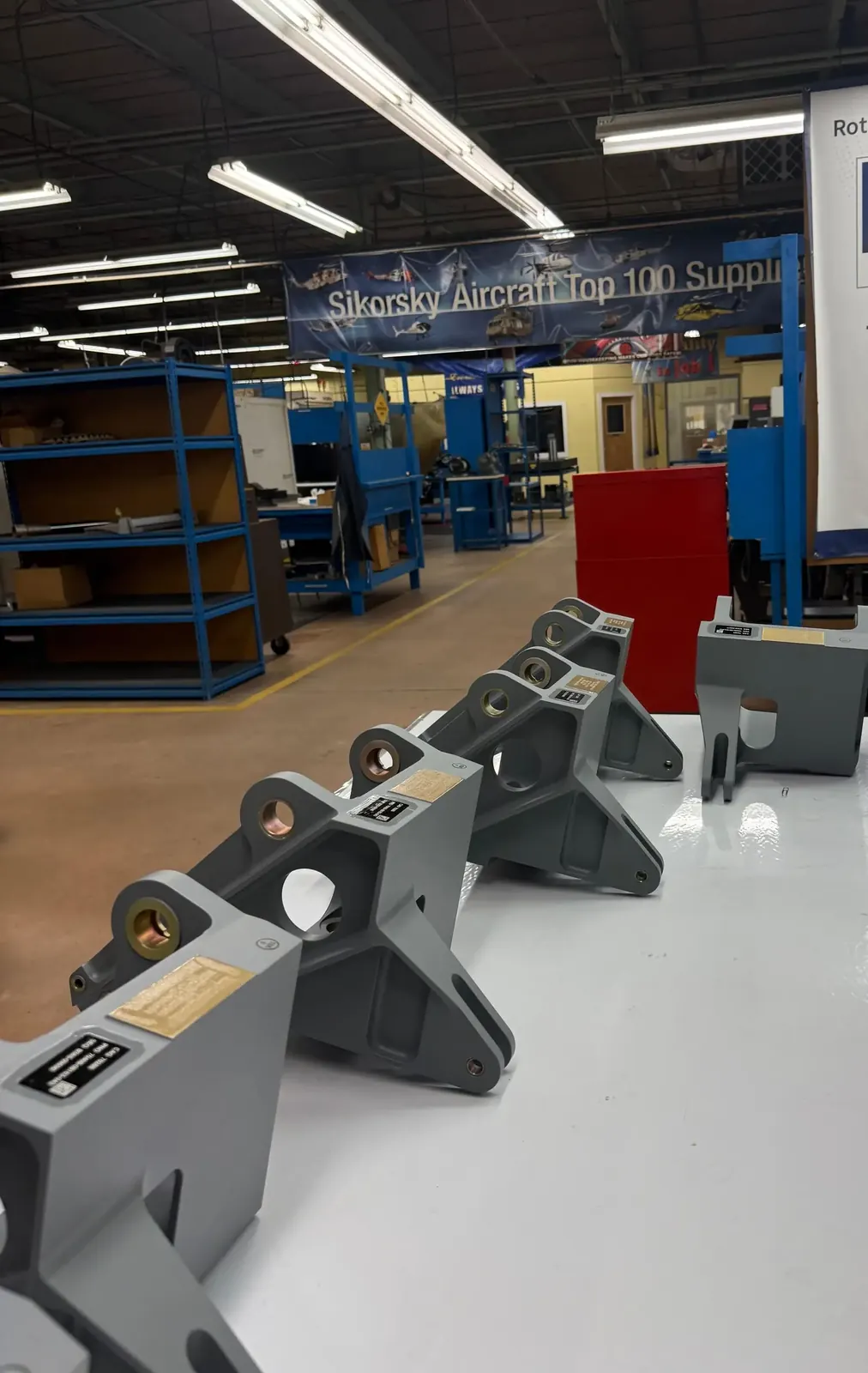
A quality certificate is where supplier evaluation starts, not where it ends. A practical checklist for procurement and supplier-quality teams qualifying a machining supplier for flight hardware.
Qualifying a new supplier for flight hardware is one of the highest-leverage decisions a procurement or supplier-quality team makes. A poor choice shows up months later as escapes, rework, late deliveries and audit findings. A good one disappears into the background, which is exactly what you want.
Most evaluations begin with the quality certificate. That is the right starting point, but a certificate only tells you that a management system exists. These are the questions that tell you whether it works.
1. Read the certificate, not just the logo
- Standard and status: confirm the standard, for example AS9100D, and that the certificate is current. AS9100-series certifications can be checked in the IAQG OASIS database.
- Scope: the certified scope describes the activities covered. Make sure it includes the work you are buying.
- Site: confirm the certificate covers the facility that will make your parts.
- Issuer: check the certification body and its accreditation.
TEK Precision publishes its certificate number, certification body, accreditation and certified scope on its Quality page, and the certificate itself can be downloaded from the top of every page on this site.
2. Look at customer approvals and performance history
Registrar certification shows that a system meets a standard. Customer approvals and performance awards show how that system performs for OEMs that audit and score their suppliers. Ask which approvals the supplier holds, which are current, and whether they apply to the processes you need. Ask for delivery and quality performance data where the supplier can share it.
TEK's customer-issued supplier awards, including awards from Northrop Grumman, UTC and Lockheed Martin, are listed on the Awards page.
3. Check how special processes are controlled
Special processes such as bonding, heat treatment, etching and stress relieving cannot be fully verified by inspecting the finished part. Their quality depends on process control. Ask which special processes are performed in-house and which are subcontracted, how subcontracted processors are approved, and how process parameters and results are recorded for each lot.
4. Verify calibration and measurement capability
- Is measuring and test equipment calibrated to standards traceable to NIST?
- Is there a recall system, and what happens to parts measured with a gage that is later found out of tolerance?
- Does the inspection equipment match the tolerances and features on your drawings, including thread gaging, hardness testing and CMM capacity?
The equipment behind TEK's inspection is listed on the Quality page and in the facility inspection equipment inventory.
5. Confirm inspection independence
Inspection needs the authority to stop nonconforming product regardless of schedule pressure. Ask where quality reports in the organization and who can release product. A quality function that reports to production has a built-in conflict of interest.
At TEK, the quality organization reports directly to leadership. A Director of Quality and a Quality Control Manager / Chief Inspector oversee source inspection, in-process inspection, calibration, first-piece inspection and facility surveys. The structure is published on the Quality page.
6. Ask how first articles are handled
A first-article inspection should show that a production process, not just one part, will reliably produce conforming hardware. Ask how first articles are planned and documented, and how a first article is repeated after a change. For what a complete FAI should contain, see First-Article Inspection: What Buyers Should Actually Expect.
7. Test traceability
Pick a completed job and ask the supplier to trace it: from the material certification, through each operation and inspection, to the certificate of conformance shipped with the parts. How quickly and completely that trail can be produced tells you more about the quality system than any procedure document.
8. Visit the floor
A facility audit shows what documents cannot: housekeeping, how nonconforming material is identified and segregated, whether work instructions are at the point of use, and how operators talk about their own processes.
TEK Precision welcomes procurement teams to schedule a facility quality audit at its Deer Park, NY plant.
Related capabilities: Quality system approvals · Inspection and test equipment · Facility and equipment